
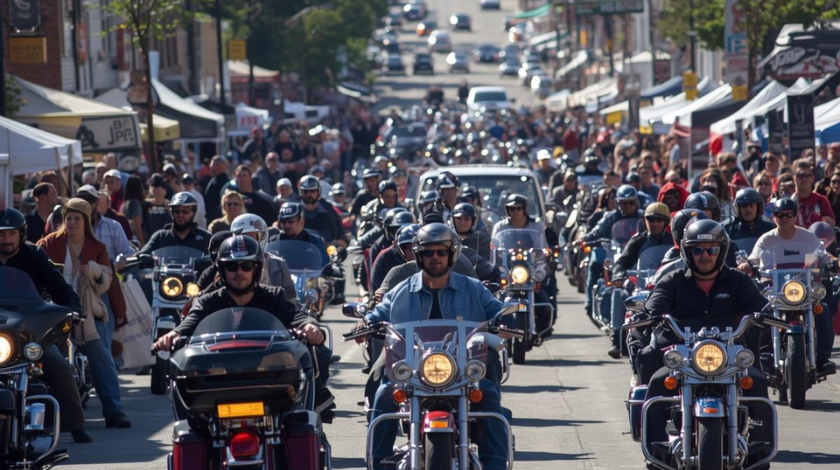
Every August, a small town in South Dakota transforms from a quiet community of about 7,000 residents into one of the largest gatherings of motorcycle enthusiasts on the planet. If you have ever wondered just how massive the Sturgis Motorcycle Rally really is, you are not alone. Whether you are planning your first trip, researching the economic impact, or simply curious about the scale of this iconic American event, understanding the attendance numbers gives you real insight into what makes this rally tick.
I have been following motorcycle culture for years, and I can tell you that the attendance figures at Sturgis tell a fascinating story about American road culture, economic trends, and the evolving demographics of riders. The numbers are not just statistics on a page. They represent hundreds of thousands of stories, millions of miles ridden, and an economic engine that powers an entire region for months.
What Is the Sturgis Motorcycle Rally?
Before we dive into the attendance data, let us get our bearings. The Sturgis Motorcycle Rally began in 1938 when the Jackpine Gypsies Motorcycle Club organized a small race with just nine participants and a handful of spectators. They called it the Black Hills Motor Classic back then. Everyone had a few beers, watched some stunts, and went home. Nobody imagined that eighty-five years later, this tiny gathering would grow into the largest motorcycle rally in the world.
Today, the rally takes place annually in Sturgis, South Dakota, a town nestled in the beautiful Black Hills region. The event typically runs for 10 days in early August, though related events and pre-rally activities can extend the experience even further. What started as a single-day race has evolved into a massive celebration featuring concerts, bike shows, races, vendor exhibitions, charity rides, and what feels like a million motorcycles thundering through the streets.
The attendance matters because it affects everything from hotel prices to traffic patterns to how local businesses prepare for the influx. When half a million people descend on a town built for seven thousand, every single aspect of daily life changes.
Current Attendance Numbers: The Real Data
Let us talk about the numbers that actually matter. According to official traffic data released by the South Dakota Department of Transportation, the 2024 Sturgis Motorcycle Rally saw 470,987 vehicles enter the city between August 2nd and August 11th. That represented about a 3% increase from 2023, showing steady growth even if it fell below the five-year average.
But here is where it gets interesting. The 2025 rally, which marked the 85th anniversary, absolutely crushed expectations. The DOT reported 537,459 vehicles entered Sturgis during the ten-day event, representing a 14% jump from 2024 and an 11.3% increase over the five-year averag. Monday, August 4th, saw the busiest single day, with 68,906 vehicles recorded, 19% above the five-year average for that day.
Now, you might be wondering how these vehicle counts translate to actual people. That is where it gets tricky. The South Dakota DOT uses road tube counters placed at nine locations around the Sturgis region. These counters register one vehicle for every two axles that hit the sensor. So a motorcycle counts as one, but so does a car towing a motorcycle trailer. A single visitor might be counted multiple times if they leave and re-enter the area during the week.
To get a clearer picture of actual human attendance, the City of Sturgis has begun using Placer.ai’s mobile device-tracking technology. This system uses aggregated cellphone location data to estimate unique visits. In 2025, this technology recorded more than 661,000 visits within Sturgis city limits through August 8th alone, compared to 637,400 in 2024 and 617,000 in 2023. This data captures walk-ins, multiple riders per vehicle, and people using public transportation, such as the DaBus shuttle system.
Historical Attendance Trends
To truly understand where we are, we need to look at where we have been. The Sturgis Motorcycle Rally has seen incredible growth over its lifetime. In 1940, just two years after the first event, attendance reached about 3,000 people. That might sound small today, but for a town of a few hundred residents, that was already a massive influx.
The rally grew steadily through the decades, but the real explosion came in the 1990s and 2000s as motorcycle culture went mainstream and baby boomers hit their peak riding years. The absolute peak came in 2015 when the rally celebrated its 75th anniversary. That year, an astounding 747,032 vehicles were counted, representing the largest gathering in the event’s history.
Then came 2020. The COVID-19 pandemic forced the cancellation of most major events worldwide, but Sturgis went ahead with its 80th rally. Attendance that year dropped to approximately 462,182 vehicles according to the South Dakota DOT, down roughly 7.5% from 2019. A study published in the National Institutes of Health documented how this became the largest public gathering in the country during the pandemic, with significant public health implications that extended far beyond South Dakota’s borders.
The recovery since then has been gradual but steady. Over the last five years, the average attendance has hovered around 500,000 vehicles, with 2023 seeing a dip to 458,161 before the rebound in 2024 and the significant surge in 2025. These fluctuations tell us that while the rally remains incredibly popular, it faces the same challenges as any major event: economic conditions, changing demographics, and competition for people’s vacation time and money.
How Attendance Is Actually Measured
This is something that confuses many people. When you read that 537,459 vehicles attended the 2025 rally, what does that actually mean? The South Dakota Department of Transportation has been using the same basic methodology for years to ensure consistency in year-over-year comparisons.
They place road tube counters at nine strategic entry points around the Sturgis area. These tubes detect when a vehicle passes over them by measuring the pressure change. Because most motorcycles and most cars have two axles, the system treats them similarly. A motorcycle counts as one vehicle. A pickup truck towing a motorcycle trailer also counts as one vehicle. A tour bus full of people counts as one vehicle.
This means the vehicle count significantly understates the actual number of people attending. If you assume an average of 1.5 people per vehicle (accounting for solo riders, couples, and groups), you could estimate that the 2025 rally brought somewhere between 700,000 and 800,000 actual humans to the area. The Placer.ai cell phone data supports this, showing over 661,000 unique visits in just the first eight days of the 2025 event.
The city also uses supplementary methods to gauge attendance. They track the amount of garbage hauled away during rally week, count temporary vendor licenses (823 in 2025, up from 794 in 2024), monitor traffic at Mount Rushmore National Memorial, and even use daily photo counts of people on Main Street. None of these methods is perfect, but together they give officials a reasonable picture of crowd sizes.
Who Actually Attends? Demographics Breakdown
Here is where things get really interesting. The stereotype of the Sturgis attendee as a middle-aged white guy on a Harley is not entirely wrong, but it is becoming less accurate every year.
According to data from a 2022 Texas A&M University study of the rally’s economic impact, the average attendee was 50 years old, with 60% identifying as male. However, that average age has actually been dropping. In 2015, the average age was 53.1. By 2022, it had fallen to 50.8. That might not sound like much, but in a demographic that skews older, a two-and-a-half-year drop in average age is significant.
Perhaps even more surprising is that 12% of attendees in 2022 did not even own a motorcycle, up from just 1% in 2015. This tells us the rally is becoming more of a general entertainment destination and music festival, attracting people who want to experience the atmosphere even if they do not ride. Additionally, 38% of attendees in 2022 reported towing their motorcycles to Sturgis rather than riding them the entire way, up 12% from 2015.
The rally has also seen growth in female attendance, reflecting the broader trend of more women entering motorcycling. Data from the Black Hills and Badlands Tourism Association showed that between 2022 and 2023, attendance in the 25-44 age group increased by 3%. Rally organizers are actively trying to accelerate this trend through new events like the inaugural Sturgis TT street race, which they hope will attract younger riders who might find traditional Harley-Davidson motorcycles financially out of reach.
Economic Impact of Those Numbers
Why do these attendance figures matter so much? Because they translate directly into dollars for South Dakota and the Sturgis community. A 2022 study from Texas A&M University estimated that the Sturgis Motorcycle Rally generated $784 million in economic impact for South Dakota. That is nearly a billion dollars from a ten-day event.
The state collected over $1.4 million in sales tax revenue during the 2024 rally alone, though this was actually down 3% from 2023. The 2025 rally saw tax collections reach $1,581,736, up 13% from the previous year. These numbers matter to the 58,000 South Dakotans employed directly or indirectly by tourism, who generate $2.2 billion in household income across the state.
When attendance drops, local businesses feel it immediately. Hotels, restaurants, bars, campgrounds, and vendors all depend on those hundreds of thousands of visitors to make their year profitable. The Buffalo Chip campground, Full Throttle Saloon, and hundreds of smaller businesses on Main Street and throughout the region base their entire business models on rally season.
Comparing Sturgis to Other Major Rallies
To put Sturgis attendance in perspective, it’s helpful to compare it with other major motorcycle rallies. Daytona Bike Week in Florida typically draws around 500,000 visitors over its ten-day run, making it comparable to Sturgis in raw numbers, though spread across a much larger urban area. Laconia Motorcycle Week in New Hampshire attracts roughly 300,000 visitors. The Rolling Thunder ride in Washington, D.C., which was discontinued after 2019, once drew hundreds of thousands for a single-day event.
What makes Sturgis unique is the concentration of people in such a small geographic area. Sturgis proper has a population of about 7,020 residents. When half a million people descend on a town that size, the density creates an atmosphere unlike anywhere else. The entire town becomes a motorcycle pedestrian mall, with Main Street closed to cars and open only to bikes and foot traffic.
What Affects Attendance Year to Year?
If you are trying to predict whether next year’s rally will be crowded or manageable, several factors influence attendance. Gas prices play a huge role because many attendees ride hundreds or thousands of miles to reach Sturgis. When fuel costs spike, you often see a dip in attendance from distant regions.
The weather is another major factor. South Dakota in August can be hot, but it can also bring sudden thunderstorms and even hail. A particularly severe weather forecast can suppress day-trip attendance. The 2024 rally benefited from generally favorable conditions, which likely contributed to the 3% increase over 2023.
Special events also drive attendance spikes. The 75th anniversary in 2015 set the record. The introduction of new events like the Sturgis TT street race in 2024 helped boost attendance on the final weekend, which traditionally sees crowds thin out as people head home. Economic conditions matter too. When the economy is strong and disposable income is high, more people can afford the trip, the bike upgrades, and the rally merchandise.
Planning Your Visit Based on Attendance Data
So what does all this mean if you are planning to attend? First, understand that the first Monday of the rally is typically the busiest single day. In 2025, that Monday saw nearly 69,000 vehicles enter the area. If you want to experience the energy at its peak, that is your day. If you prefer slightly smaller crowds while still having plenty to do, consider arriving mid-week or staying through the second weekend.
Book your accommodations as early as possible. With attendance regularly exceeding 500,000 vehicles, every hotel room, campground spot, and rental property within 100 miles fills up months in advance. Some riders book their lodging for next year’s rally a year before they even leave the current rally.
The attendance data also suggests that the rally is evolving. With 12% of attendees not owning motorcycles and a growing younger demographic, you do not need to be a hardcore biker to enjoy the experience. The concerts, vendor exhibitions, and scenic rides through the Black Hills offer plenty for everyone.
Future Predictions: 2026 and Beyond
Looking ahead to the 2026 rally, which will mark the 86th anniversary, expectations are high following the strong 2025 showing. The rally is scheduled for August 7-16, 2026, and early indicators suggest another strong year. The success of new events like the street race and the “OG HD” marketing campaign targeting younger audiences suggests organizers are successfully broadening the rally’s appeal.
However, challenges remain. The aging of the core baby boomer demographic that has driven rally growth for decades means the event must continue attracting younger riders. The high cost of new motorcycles, particularly Harley-Davidson models, presents a barrier for younger potential attendees. Rally organizers seem aware of this, partnering with more affordable motorcycle manufacturers and creating events that appeal to a broader audience.
The 14% attendance surge in 2025 suggests the rally remains healthy and relevant. If economic conditions remain stable and gas prices do not spike dramatically, we could see attendance continue to climb toward the 600,000-vehicle mark in the coming years. However, it is unlikely to reach the 2015 peak of 747,000 unless a major anniversary or special event draws the crowds.
Conclusion
The Sturgis Motorcycle Rally attendance numbers tell a story of remarkable growth, resilience through challenges like the COVID-19 pandemic, and an evolving demographic that keeps this 85-year tradition alive and thriving. From the 470,987 vehicles in 2024 to the impressive 537,459 in 2025, the rally continues to draw hundreds of thousands of people to a tiny South Dakota town every August.
Whether you are a first-timer planning your initial pilgrimage or a veteran rider who has been coming for decades, understanding these attendance trends helps you know what to expect. The rally is not just getting smaller or just getting bigger. It is changing, becoming more diverse, more inclusive, and finding new ways to attract the next generation of motorcycle enthusiasts.
The thunder of half a million motorcycles rolling through the Black Hills is not going to be silent anytime soon. If anything, it is getting louder.
Frequently Asked Questions
Q: How many people actually attend the Sturgis Motorcycle Rally? A: While official counts measure vehicles (537,459 in 2025), actual attendance is estimated between 700,000-800,000 people when accounting for multiple riders per vehicle and passengers in cars and RVs.
Q: What was the biggest year for Sturgis Rally attendance? A: The 75th anniversary in 2015 holds the record with 747,032 vehicles counted, making it the largest gathering in the rally’s history.
Q: How does South Dakota count Sturgis Rally attendance? A: The South Dakota DOT uses road tube counters at nine entry points around Sturgis, counting vehicles by detecting two axles. The city also uses cell phone tracking data from Placer.ai to estimate unique visits.
Q: Is Sturgis Rally attendance increasing or decreasing? A: After a dip during COVID-19 and a slight decline in 2023, attendance has rebounded strongly. 2024 saw a 3% increase, and 2025 jumped 14% from the previous year.
Q: What percentage of Sturgis attendees don’t own motorcycles? A: Surprisingly, 12% of 2022 attendees did not own a motorcycle, up from just 1% in 2015, showing the rally’s evolution into a broader entertainment destination.
Q: How does Sturgis compare to Daytona Bike Week? A: Both events draw around 500,000 visitors, but Sturgis concentrates that crowd in a much smaller area (Sturgis population ~7,000 vs. Daytona’s urban sprawl), creating a more intense atmosphere.
Q: What is the average age of Sturgis Rally attendees? A: The average age has been declining, dropping from 53.1 in 2015 to 50.8 in 2022, as the rally successfully attracts younger riders.
Q: How much economic impact does Sturgis Rally attendance generate? A: The 2022 Texas A&M study estimated $784 million in economic impact for South Dakota, with over $1.5 million in tax revenue collected during the 2025 rally alone.
Q: What is the busiest day of the Sturgis Rally? A: The first Monday of the rally is typically the busiest single day. In 2025, Monday, August 4th, saw 68,906 vehicles, 19% above the five-year average.
Q: When is the 2026 Sturgis Motorcycle Rally? A: The 86th Sturgis Motorcycle Rally is scheduled for August 7-16, 2026.