
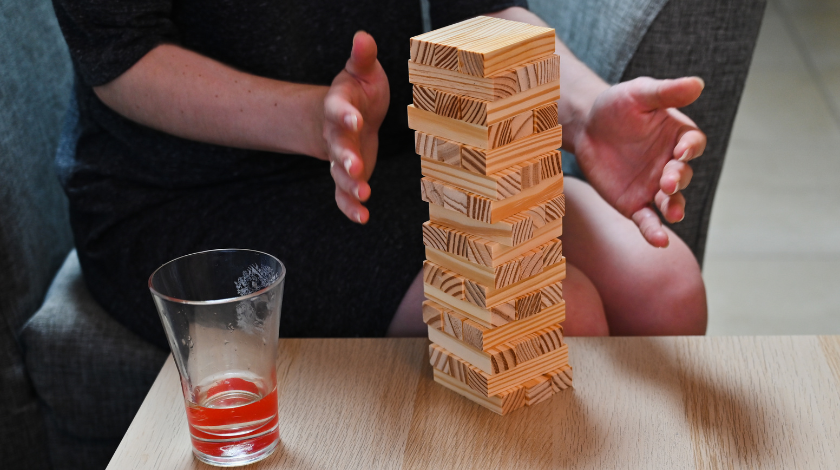
I still remember the first time I saw a giant stacking game at a friend’s wedding reception back in 2019. It was one of those generic wooden block towers that looked like someone had blown up a regular Jenga set with a growth ray. People were gathered around it, drinks in hand, cheering every time someone successfully pulled a block without sending the whole thing crashing onto the grass. The energy was infectious. But here’s the thing—that particular set looked rough. The wood was splintered, the finish was uneven, and by the end of the night, some blocks were already showing serious wear.
That experience stuck with me because it highlighted both the potential and the problem with outdoor stacking games. They’re incredibly fun social catalysts, but most of them feel like afterthoughts—cheaply made, ugly to look at, and designed to last maybe one summer before they end up in a landfill. So when I first encountered the Sunnylife Giant Jumbling Tower at a boutique beach shop in Sydney two years ago, I was genuinely surprised. Here was a stacking game that actually looked beautiful. The blocks came in these gorgeous pastel shades that reminded me of gelato, and the wood felt substantial and smooth in my hands. I knew immediately that this wasn’t just another knockoff product trying to capitalize on the giant game trend.
Since that discovery, I’ve owned my own Sunnylife Giant Jumbling Tower for over eighteen months now. I’ve dragged it to beach houses, set it up at family barbecues, and even brought it to a company picnic. What I’ve learned is that this product represents something rare in the outdoor games market: a perfect marriage of aesthetics and function. It’s the kind of item that doesn’t just entertain guests—it actually enhances the visual atmosphere of your outdoor space while providing genuine, tension-filled fun that works for kids, adults, and everyone in between.
What Makes Sunnylife Different from Generic Giant Jenga
Before we dive into the specifics, let’s address the elephant in the room. Yes, the Sunnylife Giant Jumbling Tower is a stylized version of Jenga. The core mechanics are identical: stack wooden blocks in alternating layers of three, then take turns removing pieces from lower levels and placing them on top until gravity wins and the whole structure comes tumbling down. If you’re familiar with the classic tabletop version, you already know 90% of how to play this game.
But calling this just “giant Jenga” misses the point entirely, and here’s why. Sunnylife is an Australian lifestyle brand that started on the beaches of Sydney with a very specific mission: to create products that celebrate summer living without sacrificing design sensibility. When you buy their Giant Jumbling Tower, you’re not just buying a game—you’re buying into a particular aesthetic vision. The company describes their philosophy as bringing “earthy, modern feel” to classic outdoor activities, and that shows in every detail of this product.
The most obvious difference is the color palette. While most giant stacking games use plain natural wood or primary colors that look like they belong in a preschool, Sunnylife offers its blocks in sophisticated overdyed hues. The “Pool Side Pastel Gelato” version features soft pinks, mint greens, pale yellows, and powder blues that look genuinely beautiful whether the tower is fully stacked or scattered across your patio. There’s also an “Ombre Sherbert” variant with acrylic blocks that creates an almost art installation effect when built
. These aren’t just games; they’re conversation pieces that photograph incredibly well for social media (which, whether we like it or not, matters in today’s experience-sharing culture).
Beyond aesthetics, construction quality sets Sunnylife apart from the dozens of cheap alternatives flooding online marketplaces. Each block is made from natural wood and hand-dyed rather than spray-painted, giving the colors depth and variation that machine-finished products can’t replicate. The blocks measure significantly larger than standard Jenga pieces—when fully assembled, the tower stands about 1.5 feet tall initially, but can grow to over 3 feet during gameplay, depending on how carefully players stack
. The weight distribution feels calibrated for outdoor conditions; heavy enough to stay stable in a gentle breeze, but not so heavy that they become dangerous when the tower eventually collapses.
First Impressions: Unboxing the Giant Jumbling Tower
When my Sunnylife Giant Jumbling Tower arrived, the first thing I noticed was the packaging. Unlike the flimsy cardboard boxes that most outdoor games come in, this arrived in a sturdy canvas carrying bag with the Sunnylife logo printed in a subtle tone-on-tone design. The bag itself is a quality piece of kit—thick enough to protect the blocks during transport and equipped with actual comfortable handles rather than the cheap rope straps I’ve seen on competing products.
Opening the bag revealed 54 wooden blocks wrapped in recyclable paper rather than plastic, which earned immediate points from my environmentally conscious partner. The blocks have substantial heft. Each one measures roughly 8 inches long and 2.5 inches wide, making them significantly larger than the travel version but still manageable for most adults to manipulate with one hand. The “Pastel Gelato” color scheme was even more attractive in person than in photos, with each block showing slight variations in the dye that suggested genuine hand-finishing rather than factory uniformity.
What struck me most during that initial inspection was the wood’s smoothness. I’ve handled plenty of outdoor games with rough edges and splinter potential, but these blocks had clearly been sanded to a furniture-grade finish. The corners are slightly rounded, which not only makes the blocks look more refined but also makes them easier to slide out during gameplay. Even the ends of each block feature subtle graphics—small geometric patterns and the occasional Sunnylife logo—that add personality without overwhelming the minimalist design.
The complete set weighs about 15 pounds, which is substantial enough that you’ll notice carrying it but not so heavy that it becomes a burden. For context, I’ve taken this game on weekend trips to the coast, and the weight feels comparable to carrying a small cooler filled with drinks. The included carrying bag has held up remarkably well over eighteen months of use, with no fraying at the seams or fading of the fabric despite repeated exposure to sun and sand.
Build Quality and Materials: Why Hand-Dyed Wood Matters
Let’s talk about materials because this is where Sunnylife justifies its premium price point compared to budget alternatives. The blocks are crafted from natural pine wood rather than the cheaper softwoods or compressed materials used in many competing products. Pine isn’t the hardest wood available, but it’s an excellent choice for this application because it offers the right balance of weight, durability, and workability.
The hand-dyeing process deserves special mention. Unlike painted blocks, which have color that sits on top of the wood and chips easily, these blocks are dyed all the way through. This means that even after months of sliding blocks against each other and the inevitable drops onto hard surfaces, the color remains consistent. I’ve seen cheap painted sets where the corners wear white within weeks of use; my Sunnylife blocks still look vibrant after a year and a half of regular play.
The finish is a water-based sealant rather than a heavy varnish, which gives the wood a matte, natural feel rather than a plastic-like coating. This is crucial for gameplay because it means the blocks slide against each other with just the right amount of friction. Too slick and the tower becomes unstable; too rough and you can’t extract blocks smoothly. Sunnylife has nailed this balance—the blocks move with a satisfying smoothness that makes skilled play feel rewarding.
One concern I had initially was how the wood would handle moisture, given that this is marketed as a poolside game. While I wouldn’t recommend submerging the blocks (they’re wood, after all), they’ve held up surprisingly well to humid beach air and the occasional splash from pool water. The dye hasn’t run or faded, and the wood hasn’t warped despite being stored in varying conditions. That said, I do make a point of letting them dry completely before packing them away, and I store the bag indoors rather than leaving it in a damp garage.
How to Play: Rules and Variations for Maximum Fun
If you’ve played Jenga, you know the basic rules, but the giant format creates some interesting variations that are worth exploring. The standard game starts with all 54 blocks stacked in layers of three, alternating the direction of each layer for stability. Players take turns removing one block from any level below the top complete layer, using only one hand, and placing it on top of the tower. The player who causes the tower to collapse loses.
The giant version adds physical comedy that the tabletop game can’t match. When you pull a block from a giant tower, the whole structure visibly shifts and sways. You can hear the wood creaking and see the tension in other players’ faces as they watch you struggle to extract a stubborn piece. The collapse, when it comes, is genuinely dramatic—blocks scattering across the lawn with a satisfying clatter that draws attention from across the yard.
Over the months, my friends and I have developed several house rules that make the game more interesting for repeat play:
Speed Rounds: Set a 30-second timer for each turn. The pressure of the countdown adds hilarious panic to otherwise steady hands, and the resulting crashes happen much faster.
Color Challenges: We designate specific colors for special rules. For instance, if you pull a pink block, you have to answer a question from the group before placing it; if you pull a blue one, the next player skips their turn. This adds social interaction beyond just the physical challenge.
Blind Draw: Players must select their block with eyes closed, feeling for the loosest piece by touch alone. This dramatically increases the difficulty and the crash rate.
Team Play: For larger gatherings, we divide into teams, with players alternating turns within each team. This creates interesting strategy discussions and spreads the pressure around.
The beauty of the Sunnylife set is that the block colors make these variations easy to implement and remember. When you’re playing with the pastel set, you can call out “green blocks are wild,” and everyone immediately understands the visual cue.
Real-World Testing: Poolside, Beach, and Backyard
I’ve used this game in three primary environments, and each presents different challenges and rewards.
Poolside is where the Sunnylife tower truly shines, both literally and figuratively. The pastel colors pop against blue water, and the game becomes a natural gathering point during pool parties. I recommend setting up on a paved patio or deck rather than on grass, mainly because wet feet can make the blocks slippery and unstable, and grass can affect the tower’s base. The carrying bag makes it easy to move the game into shade when the sun gets intense, and the blocks dry quickly if they get splashed.
Beach use requires more preparation. Sand gets everywhere, obviously, and while it doesn’t damage the wood, it does change how the blocks slide together. I’ve found that a quick wipe with a damp cloth after beach use keeps everything functioning smoothly. The weight of the blocks helps stabilize them in ocean breezes, though you’ll want to position the game in a sheltered spot if the wind picks up. The visual impact of the colorful tower against sand and surf is genuinely stunning—this is where you’ll get your best Instagram photos.
We use it most frequently in the backyard. It works equally well on grass, patio stones, or wooden decks. The noise level when the tower falls is substantial enough that I wouldn’t recommend late-night play if you have close neighbors, but during afternoon barbecues, the sound becomes part of the festive atmosphere. One unexpected benefit: the bright colors make the blocks easy to spot and retrieve, even in tall grass, unlike natural wood sets that seem to blend into the lawn.
Who Is This Game Actually For?
The marketing for the Sunnylife Giant Jumbling Tower emphasizes family fun, and that’s certainly accurate, but I’ve found the game’s appeal is much broader. Yes, kids love it—the oversized blocks make them feel like they’re playing with building toys, and the crash is exciting without being scary. But I’ve seen equal enthusiasm from adults in their twenties at casual parties, from middle-aged parents at school functions, and even from elderly relatives who appreciate the low physical demands (it’s mostly standing and gentle reaching) combined with the mental challenge.
This is an all-ages game, which is rarer than you might think. Many outdoor games skew young (like water balloon fights) or require physical capabilities that exclude some players (like volleyball or cornhole). The jumbling tower meets everyone at their comfort level. A cautious eight-year-old can play alongside a competitive adult, each engaging with the game at their own skill level.
That said, the price point does create some demographic considerations. At roughly $80-120, depending on the retailer and specific edition, this isn’t an impulse purchase for most families. You’re paying for design quality and brand reputation as much as for the game itself. I’d recommend this most strongly for: design-conscious homeowners who want their outdoor games to complement their aesthetic; frequent entertainers who host regular gatherings; beach house or vacation rental owners looking for durable, attractive amenities; and anyone seeking a memorable, high-quality gift for a family or couple who enjoys outdoor hosting.
Storage, Portability, and Practical Considerations
Living in an apartment with limited storage, I was initially concerned about where I’d keep 54 large wooden blocks. The included carrying bag solves this problem elegantly—the entire set compresses into a package roughly the size of a large gym bag, and I’ve stored it in closet tops, under beds, and in the trunk of my car without issue.
For transport, the bag’s shoulder straps make it manageable to carry from car to beach or pool, though at 15 pounds, you’ll want to minimize walking distance if possible. I typically drop passengers and equipment at the destination before parking to avoid long carries.
One practical tip: develop a system for counting blocks when packing up. The game requires exactly 54 blocks for proper play (18 layers of three), and losing even one changes the tower’s stability. I do a quick count before leaving any location—it takes thirty seconds and has saved me from discovering missing pieces later.
The blocks themselves require minimal maintenance. I give them a quick wipe-down with a damp cloth if they get dirty, and I store the bag in a dry indoor location. Avoid leaving the set in direct sunlight for extended periods when not in use; while the dye is colorfast, prolonged UV exposure will eventually fade any colored wood product.
Price vs. Value: Is It Worth the Investment?
Let’s address the cost directly because it’s the biggest barrier for potential buyers. The Sunnylife Giant Jumbling Tower typically retails between $80 and $120, while generic alternatives on major retail sites often cost $40-60. Is the premium justified?
In my experience, yes, but with caveats. If you’re buying a stacking game for a single event—say, one wedding or birthday party—a cheaper set will absolutely suffice. You’ll get your day’s entertainment and probably never think about it again. However, if you’re looking for a game that will see regular use over multiple seasons, the Sunnylife offers better long-term value.
The durability factor is significant. Cheap wooden sets often use softwood that dents and splinters, or they’re made from composite materials that swell and warp when exposed to humidity. Paint chips off, corners fray, and within a season, they look shabby enough that you hesitate to bring them out when guests are over. My Sunnylife set still looks nearly new after 18 months, and I expect to get several more years of use from it. Amortized over time, the cost-per-use becomes quite reasonable.
The aesthetic value is harder to quantify but equally real. This is a game you’ll actually want to display. It doesn’t need to be hidden in a garage between uses. When friends see it at your home, they comment on how beautiful it is before you even start playing. That design quality has social value that cheaper alternatives can’t match.
Comparison with Competitors
I’ve played several competing giant stacking games over the past two years, and the differences are instructive. The Spin Master Giant Jumbling Tower (available at major retailers like Walmart and Target) costs significantly less—usually around $45-50—but uses lighter, less substantial blocks with printed graphics rather than dyed wood
. It plays fine, but feels toy-like rather than furniture-quality.
The generic “Giant Tumbling Timbers” sets available through outdoor retailers offer larger block sizes—some reaching 5 feet when stacked—but often use unfinished or minimally finished wood that splinters easily
. They’re great for maximum visual impact but require more maintenance and lack the refined aesthetic of the Sunnylife.
For pure portability, Sunnylife’s own Travel Juggling Tower is worth considering. It uses the same colored wood philosophy, but in a compact 7.5-inch size that comes in a wooden carrying case
. I own both, and while the travel version is perfect for camping or small apartments, it lacks the dramatic physical presence that makes the giant version so engaging at parties.
Tips for Hosting the Perfect Jumbling Tower Tournament
After hosting numerous game sessions, I’ve developed some strategies for maximizing the fun:
Set the stage properly. Position the game on level ground with at least 6 feet of clearance on all sides for the inevitable collapse. Have a flat surface nearby for drinks—people always want to set beverages down while playing, and you don’t want cups on the playing surface.
Create tournament brackets. For groups of 7 or more, single-elimination tournaments keep everyone engaged. Losers of each round become the cheering section, creating natural audience energy for the finals.
Photograph the crashes. The moment of collapse is genuinely photogenic, especially with the colorful blocks scattering. Designate someone as the official photographer—people love seeing these action shots afterward.
Have a backup activity. When the tower falls, there’s a natural lull while restacking. Have music playing or another casual game (like cornhole) available for people to drift between.
Consider lighting. For evening play, string lights or lanterns near the playing area (but not touching it) create a beautiful ambiance and help players see block positions clearly.
Conclusion
The Sunnylife Giant Jumbling Tower embodies the best of modern outdoor games. It honors the simple, timeless appeal of stacking and balancing while wrapping that experience in genuinely beautiful design. After eighteen months of regular use across beaches, pools, and backyards, it justifies its premium price through durability, aesthetic appeal, and pure entertainment value.
What I appreciate most is how it brings people together across age groups and skill levels. In an era of digital entertainment and individual screen time, there’s something profoundly satisfying about a game that requires physical presence, patience, and shared tension. When that tower starts to sway, and everyone holds their breath collectively, you’re experiencing something that no video game can replicate.
If you value design quality, host regular gatherings, or want one outdoor game that will last for years rather than months, the Sunnylife Giant Jumbling Tower deserves serious consideration. It’s not just a game—it’s an investment in better summers.
Frequently Asked Questions
How tall does the Sunnylife Giant Jumbling Tower get? The tower starts at approximately 1.5 feet (18 inches) when initially stacked, but as players remove blocks from lower levels and stack them on top, it can grow to over 3 feet tall during gameplay.
What’s the difference between the Giant and Travel versions? The Giant version features 54 blocks measuring roughly 8 inches each, creating a substantial outdoor game. The Travel version uses smaller blocks (7.5 inches tall when stacked) and comes in a wooden carrying case, making it portable for camping or small spaces.
Can the Sunnylife Giant Jumbling Tower get wet? While the blocks are finished with a protective sealant, they are made of natural wood and should not be submerged. Occasional splashes from pool water won’t damage them, but they should be dried thoroughly before storage to prevent warping.
How many people can play at once? The game works best with 2-6 players taking turns. For larger groups, consider tournament-style play where winners advance to face each other.
Is this suitable for young children? Yes, children as young as 6 can participate, though they may need help reaching higher blocks. The blocks are large enough that they don’t present a choking hazard, but supervision is recommended during the collapse to prevent anyone from being hit by falling wood.
Where is Sunnylife based? Sunnylife is an Australian brand founded on the beaches of Sydney. Their products reflect a beach-lifestyle aesthetic combined with modern design sensibilities.
How do I clean the blocks if they get dirty? Wipe with a damp cloth and allow to air dry completely before storing. Avoid harsh chemicals that might damage the hand-dyed finish.