
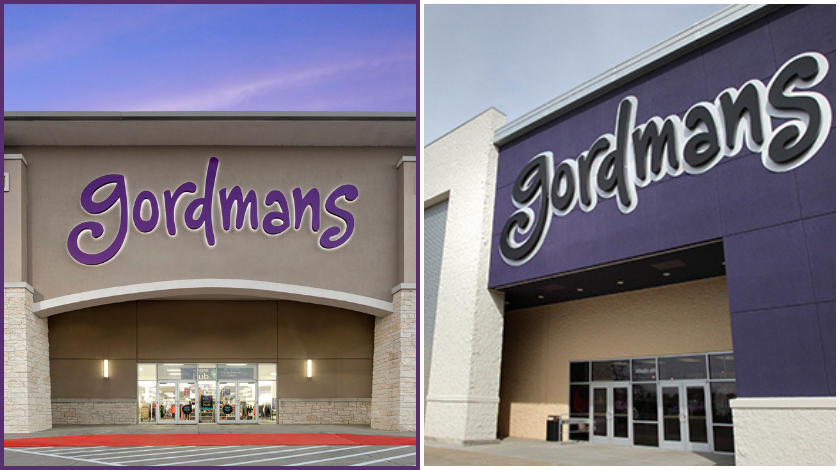
I still remember the first time I walked into a Gordmans store. It was back in 2012, and I was visiting family in Omaha, Nebraska. My aunt insisted we stop by this “treasure hunt” store she loved. Walking through those aisles, I was immediately struck by the organized chaos—racks of brand-name jeans mixed with home décor, designer handbags sitting next to kitchen gadgets, all at prices that seemed too good to be true. That experience stuck with me because Gordman’s wasn’t just another discount store. It had personality, history, and a unique energy that made shopping feel like an adventure rather than a chore.
What many people don’t realize is that Gordmans represents more than just another retail casualty in the ongoing death of American brick-and-mortar stores. This company’s story spans over a century, surviving two world wars, the Great Depression, multiple recessions, and two bankruptcies before finally meeting its most formidable opponent: the COVID-19 pandemic. Yet even now, whispers of a comeback circulate through retail industry circles, suggesting that the Gordmans name might not be finished writing its story.
The Humble Beginnings: From Small Omaha Store to Regional Powerhouse
Every great American retail story seems to start with an immigrant and a dream, and Gordmans is no exception. In 1915, Sam Richman opened a small clothing store in Omaha, Nebraska, operating under the simple name “Outfitters to the Family.” This wasn’t fancy retail—Richman focused on providing working-class families with affordable clothing options during a time when most Americans shopped at local general stores or ordered from Sears catalogs. The store’s success came from Richman’s understanding of his community. He knew what Nebraska families needed and delivered it without pretension.
The real turning point came in 1948 when Dan Gordman joined the business. Gordman wasn’t just another employee; he became Richman’s son-in-law when he married Richman’s daughter. This partnership created the Richman-Gordman brand that would dominate Nebraska retail for decades. By the company’s 75th anniversary in 1990, they had expanded to 32 locations—16 traditional department stores and 16 off-price outlets. What made this growth remarkable wasn’t just the numbers; it was the fact that a family-run business from the Midwest had managed to compete against national giants like Sears and JCPenney by staying true to its roots.
I find it fascinating how family dynamics shaped this company’s trajectory. Unlike many retail empires that lose their way when professional managers take over, Richman-Gordman maintained that personal touch well into the third generation. Jeff Gordman, the founder’s great-grandson, would later serve as CEO, bringing both family heritage and modern business education to the role. This blend of old-world retail instincts and contemporary management practices created a unique corporate culture that customers could feel when they walked through the doors.
The Game-Changing Innovation: Half Price Stores and the Off-Price Revolution
If you want to understand why Gordmans mattered in the retail landscape, you need to look at what happened in 1975. That year, the company launched an experiment that would ultimately define its future: the “½ Price Store” concept. Located at 25th and L Streets in South Omaha, this test store sold Richman-Gordman merchandise at exactly half the regular price. The concept was brilliantly simple—take excess inventory, discontinued items, and overstock from the full-price stores, then move them to a separate location where bargain hunters would line up for the deals.
This wasn’t just discounting; it was the birth of what we now call the “treasure hunt” retail experience. Unlike traditional department stores with their predictable seasonal rotations, the ½ Price Store model meant that inventory changed constantly. You might find a $200 designer coat for $50 one week, and it would be gone the next. This created urgency and excitement that kept customers coming back regularly, not just when they needed something specific.
The success was immediate and explosive. Six more ½ Price Stores opened throughout the 1970s, each generating sales volumes that exceeded expectations. By creating a separate corporate structure for this division, Richman-Gordman effectively built two businesses under one roof: the traditional department stores serving conventional shoppers, and the off-price stores capturing the growing segment of consumers who wanted brand names without the brand-name prices.
What strikes me as particularly forward-thinking is how this model anticipated the modern retail landscape. Today, off-price retailers like TJ Maxx, Marshalls, and Ross dominate the physical retail space while traditional department stores struggle. Gordmans was pioneering this approach decades before it became an industry standard. They understood something that took other retailers years to figure out: middle-class consumers wanted the thrill of the hunt combined with the assurance of quality brands. They didn’t want cheap knockoffs; they wanted authentic merchandise at accessible prices.
The Private Equity Era: Growth at What Cost?
The story of Gordmans took a dramatic turn in 2008 when Sun Capital Partners, a private equity firm, acquired the company. Private equity involvement in retail often follows a predictable pattern: buy an established brand, load it with debt to fund rapid expansion, extract value through dividends and fees, then either sell it off or take it public. Gordmans fit this template perfectly, though the results would prove devastating in the long run.
Under Sun Capital’s ownership, Gordmans pursued aggressive expansion. The store count grew rapidly, mirroring the expansion strategies of larger competitors like JCPenney and Macy’s. In 2010, the company went public with an IPO, though Sun Capital maintained majority control. The stock traded under the ticker GMAN, and for a while, things looked promising. The off-price model was gaining traction nationally, and Gordmans seemed positioned to capture this momentum.
However, this growth came at a heavy price. By 2017, Gordmans carried approximately $85 million in debt, much of it due to vendors and secured creditors. The rapid expansion had strained relationships with suppliers, leaving the company in a dangerous position where it needed constant cash flow just to service its debt obligations. When sales began declining—and they dropped a staggering 75% in the final year before bankruptcy—the house of cards began to collapse.
I’ve always been skeptical of private equity’s role in retail, and the Gordmans case study reinforces my concerns. While Sun Capital certainly provided capital for growth, it also extracted significant value through management fees and dividends, leaving the operating company with diminished resources to weather downturns. When vendor financing companies began tightening credit to Gordmans in early 2017, the company had no cushion to fall back on. They were forced to purchase inventory on cash-on-delivery terms, which destroyed their liquidity and, as court documents described, created a “negative feedback loop.”
The First Crash: 1992 Bankruptcy and Rebirth
What makes the Gordmans story particularly compelling is that the 2017 bankruptcy wasn’t the company’s first brush with financial disaster. Back in 1992, Richman-Gordman filed for bankruptcy protection, forcing the closure of all its traditional department stores. This was a pivotal moment that could have ended the company entirely, but instead became the foundation for its future success.
The 1992 bankruptcy taught the Gordman family a crucial lesson: the future wasn’t in traditional department store retail. While competitors like Dillard’s and Macy’s were building massive anchor stores in shopping malls, Gordmans chose a different path. They emerged from bankruptcy protection, focusing exclusively on the off-price division, and rebranded the ½ Price Stores under the simpler, more memorable “Gordmans” name by 1996.
This pivot required courage. Abandoning the department store model meant walking away from decades of brand recognition and established customer relationships. However, it also meant shedding the overhead costs, inventory complexity, and competitive pressures that were crushing traditional retailers. The off-price model offered leaner operations, faster inventory turns, and higher per-square-foot margins.
The first two standalone Gordmans stores opened in Tulsa, Oklahoma, in August 1999, representing a completely new retail prototype. These stores were designed specifically for the off-price experience—wider aisles to accommodate the treasure hunt browsing style, flexible fixtures that could be rearranged quickly as new merchandise arrived, and a focus on high-energy, high-turnover shopping environments. This reinvention positioned Gordmans perfectly for the 2000s retail landscape, though it would ultimately prove insufficient for the challenges of the 2010s.
The Digital Blind Spot: How E-Commerce Caught Gordmans Sleeping
If there’s one lesson that modern retailers should take from the Gordmans story, it’s this: adapting to e-commerce isn’t optional, and waiting until 2015 to launch a website is corporate suicide. When Gordmans finally entered the digital space, they were already hopelessly behind competitors who had spent a decade building online infrastructure, customer databases, and omnichannel fulfillment capabilities.
The numbers tell a devastating story. According to court filings from the 2017 bankruptcy, online sales accounted for less than 1% of Gordmans’ total revenue in the year before filing. Compare this to competitors like Nordstrom, where digital sales were approaching 25% of total volume, or even off-price competitors like TJX Companies, which had invested heavily in digital integration despite the challenges of selling constantly changing inventory online.
This digital failure wasn’t just about missing sales opportunities; it fundamentally changed how customers interacted with the brand. Modern shoppers research online before visiting stores, check inventory availability through apps, and expect seamless integration between digital and physical channels. Gordmans couldn’t offer any of this. Their customers were increasingly older shoppers who remembered the store from its heyday, while younger consumers—the future of retail—barely knew the brand existed.
I remember trying to shop at Gordmans online around 2016 and finding the experience frustratingly limited. The website showed only a fraction of in-store inventory, shipping was slow, and returns required visiting physical locations. It felt like a checkbox exercise rather than a genuine digital strategy. In an era when Amazon was offering same-day delivery and easy returns, Gordmans’ digital presence was essentially a brochure with a shopping cart attached.
The tragedy here is that off-price retail actually translates well to e-commerce when done correctly. Look at how successful Nordstrom Rack’s online business has become, or how TJ Maxx has built a robust digital presence. The treasure hunt experience can be replicated through flash sales, limited-time offers, and personalized recommendations. Gordmans had the brand relationships and merchandising expertise to make this work, but they lacked the vision and investment to execute it properly.
The 2017 Bankruptcy: When the House of Cards Fell
March 13, 2017, marked the end of Gordmans as an independent company. Filing for Chapter 11 bankruptcy protection in the Nebraska federal court, the retailer announced plans to liquidate inventory across all 106 stores operating in 22 states. The filing listed total debt of approximately $131 million against declining assets, creating a situation where even optimistic restructuring scenarios seemed unlikely.
The immediate cause of bankruptcy was the collapse of vendor financing. In the retail industry, most suppliers don’t require immediate cash payment; instead, they work with “factors”—financial intermediaries who pay suppliers immediately and collect from retailers later. When Gordman’s financial health deteriorated, these factors led companies to stop extending credit to it. By February 2017, vendor credit had “effectively shut off,” forcing Gordmans to pay cash on delivery for all new inventory.
This created an impossible situation. Without fresh merchandise flowing into stores, sales naturally declined further, making vendors even more reluctant to extend credit and further reducing inventory—a classic death spiral. Court documents explicitly stated that “without the flow of fresh inventory, [Gordmans’] retail business would not be sustainable.” The company had reached a point where even profitable stores couldn’t generate enough cash to fund operations company-wide.
What makes this bankruptcy particularly poignant is the family element. Jeff Gordman, the founder’s great-grandson and former CEO, attempted to regain control of his family’s legacy. He challenged Stage Stores’ acquisition bid, hoping to keep Gordmans independent or at least maintain some family involvement. Ultimately, Stage Stores won the bankruptcy auction, paying $36.1 million for 48 store leases, the distribution center, website, fixtures, inventory, and all intellectual property, including the Gordmans name.
Stage Stores’ Big Gamble: Betting Everything on Off-Price
When Stage Stores acquired Gordmans out of bankruptcy in 2017, they weren’t just buying a brand—they were buying a potential lifeline for their own struggling business. Stage operated approximately 700 stores under various regional department store names, including Bealls, Palais Royal, Peebles, Goody’s, and the Stage banner itself. Like Gordmans, Stage was struggling with declining foot traffic and the department store apocalypse sweeping American retail.
CEO Michael Glazer saw something in the Gordmans off-price model that he believed could save his company. The plan was audacious: convert all 700+ Stage Stores locations to the Gordmans off-price format by the end of 2020. This meant completely rebranding stores, retraining employees, changing merchandising strategies, and essentially betting the entire company’s future on a concept that had only been tested in a few dozen locations.
Initial results were genuinely promising. The converted stores showed sales increases of 17% compared to their performance as traditional department stores. The off-price model delivered higher sales with less inventory investment, similar profit margins, and lower administrative costs. Stage’s stock price, which had been languishing, showed signs of life as investors bought into the transformation story.
By September 2019, Stage announced it would exit the department store business entirely, focusing exclusively on off-price retail under the Gordmans banner. They planned to have approximately 700 Gordmans stores operating across 42 states by the third quarter of fiscal 2020. It was a remarkable turnaround story in the making—until COVID-19 changed everything.
The pandemic hit Stage Stores at the worst possible moment. They were in the middle of expensive conversions, carrying significant debt from the Gordmans acquisition and expansion costs, and suddenly facing months of store closures. When Stage filed for Chapter 11 bankruptcy in May 2020, it wasn’t because the off-price strategy had failed; it was because they ran out of time and money before the strategy could fully mature.
The BrandX Acquisition: A Second Life for Gordmans?
Just when it seemed the Gordmans’ story had reached its final chapter, an unexpected plot twist emerged. In May 2022, BrandX—a company specializing in acquiring and reviving dormant retail brands—purchased the Gordmans intellectual property along with Stage Stores and several other historic department store names, including Bealls, Peebles, Palais Royal, Goody’s, The Bon-Ton, Bergner’s, Boston Store, Carson’s, Elder-Beerman, Herberger’s, and Younkers.
BrandX’s business model involves acquiring brands with strong regional recognition and nostalgic value, then determining whether to revive them as e-commerce operations, physical stores, or licensed partnerships. For Gordmans specifically, the appeal is obvious. Despite two bankruptcies and a complete liquidation, the name still carries positive associations with value-conscious Midwestern shoppers who remember the treasure-hunt experience fondly.
As of my research, BrandX has indicated plans to bring these brands back to market between 2022 and 2023, though specific timelines remain unclear. The COVID-19 pandemic complicated retail revival plans across the industry, and the current economic uncertainty makes any new retail venture risky. However, the off-price model that Gordmans pioneered remains viable—arguably more viable now than ever as inflation pushes consumers toward value-oriented shopping.
Whether Gordmans returns as physical stores, an online-only operation, or some hybrid model remains to be seen. What seems certain is that the brand has enough residual value and historical significance to justify another attempt at revival. In an era of retail homogenization, where every mall contains the same national chains, something is appealing about resurrecting a brand with genuine regional roots and a century of history.
Lessons from the Gordmans Story: What Retailers Can Learn
The Gordmans saga offers several valuable lessons for anyone interested in retail business strategy, whether you’re a store manager, investor, or simply a curious shopper trying to understand why your favorite stores keep disappearing.
First, business model innovation matters more than scale. Gordmans survived and thrived for decades because they created something genuinely different from traditional department stores. The off-price treasure hunt concept gave customers a reason to visit beyond mere convenience. However, when they abandoned innovation in favor of rapid expansion under private equity ownership, they lost the very thing that made them special.
Second, debt can kill even profitable businesses. Gordman’s stores were generating sales and serving customers right up until the bankruptcy filing. The problem wasn’t a lack of customer demand; it was the crushing weight of $85 million in debt and the loss of vendor financing. In retail, where inventory financing is the lifeblood of operations, maintaining strong supplier relationships and manageable debt levels is absolutely critical.
Third, digital adaptation cannot be delayed. Gordman’s failure to invest in e-commerce until 2015 left them permanently disadvantaged. By the time they launched their website, they lacked the technical infrastructure, customer data, and organizational expertise to compete effectively. In modern retail, digital isn’t a separate channel—it’s the foundation of customer relationships.
Finally, family businesses face unique challenges when transitioning between generations. The Gordman family’s involvement provided authenticity and institutional knowledge, but it also created emotional complications during crisis periods. Jeff Gordman’s attempt to outbid Stage Stores during bankruptcy proceedings came from a place of family pride and personal investment in the legacy. Still, it may not have been the best business decision for the company’s future.
Conclusion: The Enduring Legacy of a Midwestern Original
Walking through a Gordmans store was never just about buying stuff—it was about the possibility of discovery. That designer jacket you’d been eyeing at full price is now 60% off. The home décor piece that perfectly matched your living room was buried in a rack of miscellaneous items. The children’s clothing looked expensive but cost less than alternatives from discount stores. This was the magic that Sam Richman started building in 1915, and that magic didn’t disappear just because the company filed bankruptcy paperwork.
Gordmans represents something important in American retail history: the idea that value and quality aren’t mutually exclusive, that middle-class families deserve access to the same brands as wealthy shoppers, and that shopping can be an adventure rather than a chore. Whether BrandX successfully revives the brand or not, these principles continue to influence retail today. Every time you walk into a TJ Maxx or scroll through Nordstrom Rack’s flash sales, you’re experiencing the legacy that Gordmans helped create.
For those of us who remember pushing through those heavy glass doors, coffee in hand, ready to hunt for treasures among the racks, Gordmans will always be more than a failed retailer. It was a place where families stretched their budgets without sacrificing dignity, where college students built professional wardrobes on internship salaries, where grandparents found perfect gifts without breaking fixed incomes. That mission—democratizing access to quality merchandise—remains relevant today, perhaps more than ever.
The question isn’t whether America needs Gordmans specifically; it’s whether any retailer can successfully recreate what Gordmans represented at its best. If BrandX or another company can capture that treasure hunt excitement, maintain genuine value pricing, and combine it with modern digital convenience, they might just write the next chapter in this century-old story. Until then, we’ll keep watching, waiting, and remembering what it felt like to score that perfect find at half the price you expected.
FAQ Section
Q: What exactly happened to Gordman’s stores? A: Gordmans filed for Chapter 11 bankruptcy in March 2017 and liquidated most locations. Stage Stores purchased 48 stores and the brand name, converting them to an off-price format. However, Stage Stores filed for bankruptcy in May 2020 due to COVID-19 impacts, leading to the complete liquidation of all remaining Gordmans locations by September 2020. The brand was acquired by BrandX in 2022, with plans for a potential revival.
Q: Is Gordmans ever coming back? A: BrandX acquired the Gordmans brand in May 2022 with stated intentions to revive it along with other historic retail names. However, as of early 2024, no concrete reopening dates or specific plans have been announced. The revival depends on market conditions, financing, and BrandX’s strategic priorities.
Q: What made Gordmans different from other discount stores? A: Gordmans operated on an “off-price” model, selling brand-name merchandise at 20-60% below department store prices through a “treasure hunt” shopping experience. Unlike consistent inventory at traditional retailers, Gordmans featured constantly changing merchandise based on closeouts, overstock, and special purchases, creating urgency and excitement for bargain hunters.
Q: Why did Gordmans go bankrupt twice? A: The 1992 bankruptcy resulted from the overexpansion of traditional department stores and changing retail economics; the company successfully restructured by focusing exclusively on off-price retail. The 2017 bankruptcy stemmed from excessive debt accumulated under private equity ownership, failure to adapt to e-commerce, and the loss of vendor financing, which crippled inventory flow.
Q: What is off-price retail, and why is it successful? A: Off-price retail involves selling brand-name merchandise at significant discounts through flexible inventory purchasing—buying closeouts, overstock, and cancelled orders from manufacturers and other retailers. This model succeeds because it offers authentic brand names at accessible prices while creating a “treasure hunt” experience that encourages frequent visits. Unlike traditional retail, which has predictable seasons, off-price inventory changes constantly, driving customer excitement and loyalty.