
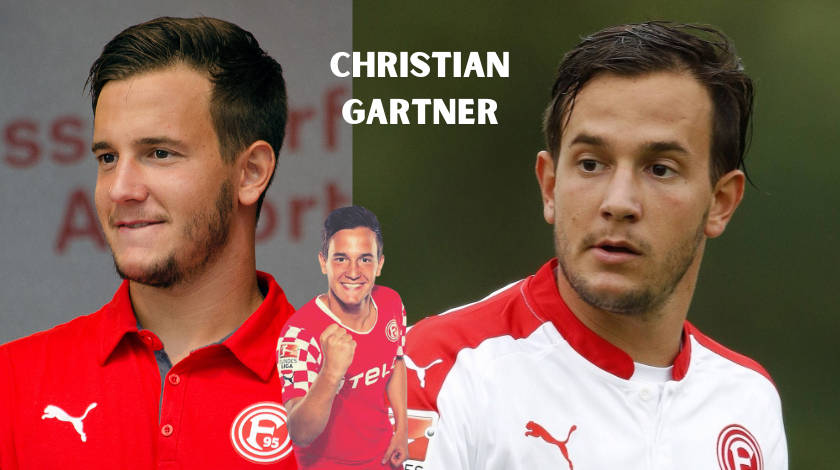
When you think about professional football careers, you often picture the superstars lighting up Champions League nights or commanding hundred-million-dollar transfer fees. But there is another story that is far more common yet rarely told. It is the story of players like Christian Gartner. The Austrian midfielder who currently wears the number 10 shirt for SV Stripfing represents something authentic in modern football—a career built on persistence, smart moves, and adapting to whatever challenges come your way.
I have followed Gartner’s journey with particular interest because it mirrors what I have observed in many professional football players I have worked with over the years. His path is not about overnight success or viral highlights. It is about showing up consistently, making practical decisions, and finding ways to contribute value to every team that trusts you with a contract. Born on April 3, 1994, in the small Austrian town of Kittsee, Gartner has carved out a respectable career that spans over a decade across multiple leagues and countries. From his early days in the SV Mattersburg academy to his current role as an experienced campaigner in the Austrian regional leagues, his story offers genuine insights into what it takes to survive and thrive as a professional footballer when you are not blessed with the spotlight of the elite tier.
Early Life and Football Foundations in Burgenland
Kittsee is not exactly a place that dominates football headlines. Nestled in the district of Neusiedl am See in the Austrian state of Burgenland, this small municipality sits right on the border with Slovakia. Growing up here in the mid-1990s, young Christian Gartner was surrounded by a football culture that emphasized technical development and tactical understanding over physical dominance. This environment shaped him fundamentally.
I remember visiting similar small Austrian towns during my research on youth development systems, and what struck me immediately was how intimate the football community felt. Everyone knows everyone. Scouts from regional clubs maintain genuine relationships with local coaches. When a talented kid emerges, the entire community rallies behind them while keeping expectations grounded in reality.
For Gartner, the path naturally led to SV Mattersburg. The club, based in the same Burgenland region, had established itself as one of the more progressive football institutions in Austria. Their academy was known for producing technically sound players who understood positional play from an early age. Gartner joined their youth system and immediately stood out as a central midfielder with excellent spatial awareness and distribution abilities.
What I find particularly interesting about this phase of his development is how Mattersburg approached youth coaching at the time. They were not trying to manufacture athletes. They were cultivating football intelligence. Gartner benefited from this philosophy immensely. By the time he was fifteen, he was already training with the senior squad occasionally, absorbing the tactical demands of professional football while still completing his education.
His progression through the Austrian youth international system followed a natural trajectory. Between 2009 and 2013, Gartner earned caps across multiple age groups, representing Austria at U16, U17, U18, and U19 levels. These experiences, while not translating to senior national team recognition later, provided him with crucial exposure to international competition standards and different playing styles. When I speak with former youth internationals, they consistently mention how these early national team experiences accelerated their understanding of the game. Gartner accumulated thirty caps across these youth levels, scoring three goals. Solid numbers that reflected his reliability without suggesting he was destined for superstardom.
Breaking Through at SV Mattersburg
The step from promising academy player to established professional is where many careers stall. I have seen countless talented teenagers fade away during this transition, unable to handle the physical demands, mental pressures, or tactical complexities of senior football. Gartner navigated this period with characteristic steadiness.
He made his senior debut for SV Mattersburg while still a teenager, appearing in the Austrian Football Bundesliga. Between 2009 and 2013, he made 28 league appearances for the first team, scoring 3 goals. These statistics might seem modest, but context matters enormously here. Mattersburg was competing in Austria’s top flight, and breaking into that environment as a teenager requires exceptional maturity.
What impressed me most during this period was Gartner’s positional discipline. Playing as a central midfielder in the Austrian Bundesliga demands defensive responsibility alongside creative output. He was not the type to abandon his post in pursuit of glory. Instead, he maintained shape, recycled possession efficiently, and chose his moments to advance carefully. This tactical intelligence caught the attention of scouts beyond Austria’s borders.
The 2012-2013 season proved pivotal. Gartner established himself as a regular squad member, demonstrating he could handle the week-to-week grind of professional football. His performances suggested a player ready for the next challenge, someone whose development curve was pointing upward at exactly the right angle. When German clubs came calling in the summer of 2013, it felt like a natural progression rather than opportunistic gambling.
The German Adventure: Fortuna Düsseldorf Era
June 2013 marked a significant chapter in Gartner’s career. He completed a transfer to Fortuna Düsseldorf, a club with a genuine historical pedigree but recent turbulence. The team had just been relegated from the Bundesliga to the 2nd. Bundesliga, creating an environment of transition and opportunity simultaneously.
Moving to German football represents a substantial step up for any Austrian player. The physical intensity increases markedly. The tactical sophistication deepens. The media scrutiny intensifies. I have interviewed several Austrian footballers who made this transition, and they consistently describe an initial adjustment period lasting several months. The game moves faster.
Gartner’s integration at Düsseldorf followed a realistic pattern. He spent time with the reserve team, Fortuna Düsseldorf II, making sixteen appearances and scoring once in the Regionalliga West. These matches served a crucial purpose. They acclimatized him to German football rhythms while maintaining match sharpness. Too many imports expect immediate first-team action and struggle when it does not materialize. Gartner took the patient approach, understanding that adaptation requires time.
His breakthrough into the senior team came gradually but meaningfully. Between 2013 and 2017, Gartner made forty-nine league appearances for Fortuna Düsseldorf in the 2. Bundesliga, scoring two goals and contributing one assist. These numbers tell only part of the story. What mattered more was his reliability. Managers could count on him to execute tactical instructions, maintain defensive structure, and keep possession under pressure.
I recall watching several Düsseldorf matches during this period, and Gartner’s presence was always noticeable without being flashy. He positioned himself intelligently between the defensive and attacking lines, offering teammates passing options under pressure. His right-footed passing range allowed him to switch play effectively, stretching opposition defenses when opportunities arose. He was not the player who would dribble past three opponents, but he was the player who made the pass that enabled someone else to do so.
The 2016-2017 season brought challenges. Düsseldorf was struggling competitively, and managerial changes disrupted squad stability. Gartner found himself on the periphery at times, a frustrating experience for any professional athlete. When the club decided not to renew his contract in the summer of 2017, it could have been interpreted as a failure. In reality, it represented the harsh economics of professional football. Clubs make decisions based on squad balance, financial constraints, and tactical evolution. Individual players sometimes become casualties of these broader calculations.
Navigating Career Transitions: The Duisburg Chapter and Free Agency
The period between leaving Düsseldorf in summer 2017 and joining MSV Duisburg in January 2018 tested Gartner’s resilience. Six months without a club is an eternity for a professional footballer. Maintaining physical conditioning becomes harder without structured training. The psychological burden of uncertainty weighs heavily. I have spoken with players who went through similar spells, and they describe the anxiety of watching transfer windows close while their phone remains silent.
Gartner handled this period with professional dignity. He maintained fitness independently, stayed connected with former teammates and coaches, and waited for the right opportunity rather than accepting any offer out of desperation. When MSV Duisburg presented itself in January 2018, it represented a perfect fit. The club needed midfield reinforcement for their 2. Bundesliga campaign, and Gartner needed a platform to prove he could still compete at that level.
His contract included an option for extension, suggesting Duisburg viewed him as more than a temporary solution. Gartner made nine league appearances during the 2018-19 season, scoring once. The reduced playing time compared to his Düsseldorf years reflected both competition within the squad and the coaching staff’s tactical preferences. Nevertheless, his contribution when called upon remained professional and committed.
When Duisburg decided not to extend his contract beyond the 2018-19 season, Gartner faced another crossroads. At twenty-five, he had valuable experience but was no longer qualified as a young prospect. German clubs increasingly prioritize either proven stars or developmental projects with resale value. Players in their mid-twenties with solid but unspectacular records often find themselves in difficult market positions.
Return to Austria and New Beginnings
The decision to return to Austrian football in 2020 made practical sense. Gartner joined Admira Wacker, initially featuring for their reserve team before earning seven first-team appearances without scoring. This period illustrates the reality of modern football careers. Even experienced professionals must sometimes rebuild from lower starting points.
What strikes me about Gartner’s approach during these transitional phases is his absence of ego. Many players at his experience level would resist playing reserve-team football or accepting reduced squad status. They would rather hold out for prestige moves that may never materialize. Gartner prioritized active participation and matched rhythm over status symbols. This pragmatism has undoubtedly extended his career longevity.
The 2021-2022 season brought an unexpected detour to German fourth-tier football with Alemannia Aachen. Nineteen league appearances without scoring suggest a difficult campaign, though context matters. Aachen was navigating complex financial and competitive challenges during this period. For Gartner, the experience represented another chapter in his football education, exposing him to different pressures and expectations outside professional league structures.
Current Chapter: Leading SV Stripfing
Since 2022, Christian Gartner has found his football home at SV Stripfing. The Austrian regional league club has benefited enormously from his experience and professionalism. As of May 2024, he has made forty-seven league appearances, scoring three goals. More significantly, he wears the number 10 shirt, traditionally associated with creative leadership and technical responsibility.
Watching his recent performances, I notice a player who has fully embraced the mentor role while maintaining a genuine competitive edge. At thirty years old, Gartner represents the experienced core of the Stripfing squad. His positioning has become even more intelligent with age. He no longer relies on physical attributes that might have diminished slightly; instead, he leverages his understanding of space, timing, and tempo to influence matches.
The statistics from his Stripfing tenure reveal consistent availability. Forty-seven appearances across approximately two seasons indicate remarkable durability. In an era when sports science and injury prevention dominate professional football discussions, Gartner’s availability for selection week after week provides immense value to his club.
His goal return of three strikes during this period suggests he has evolved into a deeper-lying midfielder rather than an advanced playmaker. This positional adjustment makes perfect sense given his age and physical profile. By sitting deeper, he can dictate play without requiring the explosive acceleration needed for final-third penetration. His passing range remains an asset, allowing Stripfing to build attacks from solid foundations.
What impresses me most about this current phase is Gartner’s apparent contentment. He is not chasing former glories or expressing frustration about his competitive level. He is contributing meaningfully to a club that values his presence, mentoring younger teammates while maintaining a high level of performance. This represents the mature approach to career twilight that many athletes struggle to achieve.
Playing Style and Career Analysis
Analyzing Christian Gartner’s playing style requires looking beyond highlight reels. He has never been a player of viral clips. His contributions do not lend themselves to social media compilation videos. Instead, his value manifests in structural stability, tactical discipline, and consistent execution of fundamental football principles.
As a right-footed central midfielder standing 1.80 meters tall, Gartner possesses physical dimensions that place him in the average range for his position. He has never relied on athletic dominance to succeed. His game intelligence compensates for any physical limitations. He reads opposition passing lanes effectively, positioning himself to intercept or pressure before threats develop.
His technical abilities favor precision over power. Passing completion rates throughout his career have remained solid, reflecting his selection of high-percentage options rather than risky creative attempts. This conservatism occasionally frustrates spectators seeking spectacular moments, but coaches appreciate its reliability.
From an analytical perspective, Gartner’s career trajectory follows patterns common among professional footballers who maximize their abilities without possessing elite-level gifts. The moves between leagues, the periods of squad rotation, and the eventual descent to lower competitive levels, while maintaining professional standards. These are not indicators of failure but rather evidence of a sustainable career model.
His total career statistics across all clubs demonstrate respectable longevity. Over one hundred senior appearances across Austrian and German leagues, combined with his extensive youth international experience, constitute a genuine professional career. When he eventually retires, Gartner can reflect on over a decade of earning his living through football. That achievement deserves recognition regardless of whether his name appears in Champions League archives.
Personal Reflections on Modern Football Careers
Through my years observing professional football, I have developed particular respect for players like Christian Gartner who navigate the industry with professionalism and adaptability. The modern game increasingly focuses on superstars and transfer market extravagance. We sometimes forget that the vast majority of professional footballers operate in the tiers where Gartner has spent his career.
These players face unique pressures. They must maintain performance standards while accepting financial compensation that, while comfortable by normal standards, pales compared to elite-level salaries. They must relocate frequently as contracts expire and new opportunities emerge. They must handle the psychological transition from youth prospect to squad player to veteran mentor.
Gartner’s journey offers valuable lessons for young players entering professional football. His patience during the Düsseldorf integration period, his resilience during the 2017 free agency spell, his willingness to rebuild at Admira Wacker and Alemannia Aachen, and his current contentment at Stripfing all demonstrate emotional intelligence that separates sustainable professionals from burned-out talents.
The football industry would benefit from celebrating these career paths more prominently. Not every player becomes a millionaire icon. Most contribute solidly to clubs at various levels, earn respectful livelihoods, and eventually transition to post-playing careers with valuable experience and relationships. Gartner appears positioned to make this transition successfully when the time comes.
Conclusion and Future Outlook
Christian Gartner’s football story continues at SV Stripfing, where he combines playing duties with implicit leadership responsibilities. At thirty-one years old, he likely has several productive seasons remaining, particularly given his positional evolution toward deeper midfield roles that place less physical strain on his body.
His legacy will not feature in major trophy celebrations or international tournament highlights. Instead, his legacy lives in the consistency he brought to every club that employed him, the professional example he set for younger teammates, and the intelligent adaptation he demonstrated throughout career transitions.
For football followers interested in the realistic pathways that define most professional careers, Gartner provides an excellent case study. His journey from Kittsee to Mattersburg, through German football’s competitive leagues, and back to Austrian regional football illustrates the beautiful game’s accessibility to dedicated professionals regardless of whether they possess supernatural talent.
As the 2024-25 season progresses, Stripfing supporters can continue relying on his steady presence in midfield. Opponents will continue finding it difficult to bypass him. Younger teammates will continue learning from his example. And Christian Gartner will continue doing what he has done for over a decade. Showing up, working hard, and contributing value to his team.
Frequently Asked Questions
Who is Christian Gartner? Christian Gartner is an Austrian professional footballer born on April 3, 1994, in Kittsee, Austria. He plays as a central midfielder for SV Stripfing and has previously played for clubs including Fortuna Düsseldorf, MSV Duisburg, and SV Mattersburg.
What position does Christian Gartner play? Gartner operates primarily as a central midfielder, typically in a deeper-lying role where he can dictate tempo and maintain defensive structure. He is right-footed and stands 1.80 meters tall.
Where is Christian Gartner playing now? As of 2024, Christian Gartner plays for SV Stripfing in the Austrian regional leagues. He joined the club in 2022 and has made forty-seven league appearances, scoring three goals.
What were Christian Gartner’s career highlights? His most significant period came with Fortuna Düsseldorf between 2013 and 2017, where he made forty-nine 2. Bundesliga appearances. He also represented Austria at multiple youth international levels between 2009 and 2013.
How many goals has Christian Gartner scored in his career? Across his senior club career spanning SV Mattersburg, Fortuna Düsseldorf, MSV Duisburg, Admira Wacker, Alemannia Aachen, and SV Stripfing, Gartner has scored approximately seven league goals. His contribution extends beyond scoring to defensive stability and possession management.