
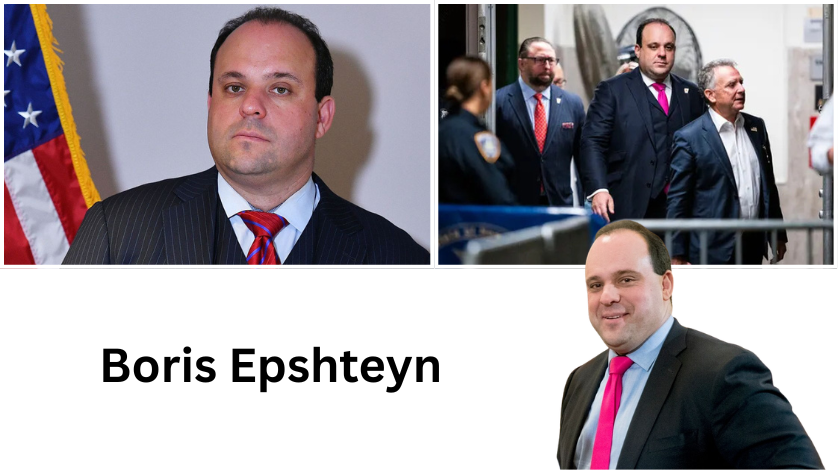
If you have been following the ups and downs of Donald Trump’s inner circle over the past few years, you have probably seen the name Boris Epshteyn pop up in headlines again and again. Sometimes he is described as Trump’s loyal “TV attack dog,” other times as a shadowy figure orchestrating legal strategies behind closed doors, and recently as the center of pay-to-play allegations that rocked the Trump transition team. But who is this man really, and how did he become such a central figure in one of the most polarizing political movements in modern American history?
I have been watching Epshteyn’s trajectory since 2016. Honestly, his story reads like a case study in how modern political power works—where loyalty, controversy, and personal connections often matter more than traditional qualifications. Whether you love him or hate him, understanding Boris Epshteyn helps us understand the machinery of Trumpworld and the blurred lines between public service and private gain that seem to define so much of today’s political landscape.
From Moscow to the White House: An Unlikely Journey
Boris Epshteyn was born in Moscow in 1982, back when it was still the Soviet Union. His family was Russian Jews who saw the writing on the wall as the USSR crumbled. In 1993, when Boris was just eleven years old, they packed up their lives and immigrated to the United States as refugees, settling in Plainsboro Township, New Jersey. They came under the Lautenberg Amendment, a program specifically designed to help Jewish refugees from the former Soviet Union find safety in America.
Growing up in New Jersey as an immigrant kid in the 1990s could not have been easy. I imagine young Boris had to navigate the typical challenges of fitting in while maintaining his heritage. He attended West Windsor-Plainsboro High School, graduated in 2000, and then did what many ambitious kids from the suburbs do—he aimed for an elite education. He started at Swarthmore College but transferred after his first year to Georgetown University, one of the country’s premier institutions for students interested in politics and foreign service.
At Georgetown, Epshteyn did not just hit the books. He joined the Alpha Epsilon Pi fraternity, made connections that would last a lifetime, and eventually earned his undergraduate degree from the School of Foreign Service in 2004. But he was not done. He stayed at Georgetown for law school, graduating from Georgetown University Law Center in 2007. This educational pedigree—top-tier university, law degree, international affairs background—should have set him up for a conventional career in government or corporate law. Instead, Epshteyn took a path that would lead him into the heart of American political chaos.
The Investment Banker Who Became a Political Fighter
After law school, Epshteyn started his career at Milbank, Tweed, Hadley & McCloy, a prestigious international law firm where he worked on securities transactions and finance deals. This was solid, respectable work—the kind of job that makes parents proud and pays the bills. But Epshteyn apparently wanted something more exciting.
In 2008, he made his first foray into politics, joining John McCain’s presidential campaign as a communications aide. This was not a senior role by any means, but it got his foot in the door. He was part of the rapid response team focused on defending Sarah Palin, which meant he learned early how to play defense in the brutal arena of presidential politics. The McCain campaign lost, of course, but Epshteyn had tasted political combat, and he seemed to like it.
Between campaigns, Epshteyn bounced around the finance world. He became a managing director at West America Securities, a boutique investment bank, until regulators shut it down in 2013. Then he moved to TGP Securities, another investment banking firm. During this period, he also moderated a panel at the 2013 “Invest in Moscow!” conference, which would later raise eyebrows given his Russian background and the subsequent scrutiny of Trump-Russia connections.
But everything changed when his college friend Eric Trump—the second son of Donald Trump—introduced him to the family business of politics.
The 2016 Campaign: Birth of the “TV Attack Dog”
When Donald Trump descended that golden escalator in 2015 to announce his presidential run, most people laughed it off as a publicity stunt. Boris Epshteyn did not laugh. He saw an opportunity, and he grabbed it.
Epshteyn became a senior advisor to the Trump campaign, but his real value was not in strategy memos or policy papers. It was on television. Epshteyn became what The New York Times called Trump’s “TV attack dog”—a surrogate who would go on cable news night after night, defending Trump against every accusation, no matter how damaging.
I remember watching him during that campaign. His style was aggressive, confrontational, and unapologetic. He would talk over interviewers, deflect tough questions, and pivot to attacks on Hillary Clinton with machine-like efficiency. MSNBC host Joy Reid described him perfectly back then: “Boris is abrasive. That is who he is, both on the air and off.” She noted that he seemed to take “delight in trying to bully the interviewer” and approached every appearance as combat.
This approach worked. Trump loved loyalty above all else, and Epshteyn demonstrated it nightly. After Trump won the election, Epshteyn was rewarded with the director of communications role for the Presidential Inaugural Committee, and then a position as special assistant to the President and assistant communications director in the White House.
But here is where it gets strange. Just two months into the Trump administration, Epshteyn abruptly resigned. The reasons were never fully explained—some said he clashed with other staffers, others suggested deeper issues. But the departure did not end his relationship with Trump. If anything, it freed him up to become even more influential.
Sinclair Broadcasting and the Return to Trump’s Orbit
After leaving the White House, Epshteyn landed at Sinclair Broadcast Group, one of the largest television broadcasting companies in America. As chief political commentator, he hosted “Bottom Line with Boris” segments that aired across Sinclair’s nationwide network of local stations. This gave him a platform to reach millions of viewers with pro-Trump messaging, effectively extending the administration’s reach into local markets.
But Epshteyn was not content to be a pundit. When Trump ran for reelection in 2020, Epshteyn returned as a strategic advisor and co-chair of Jewish Voices for Trump. He led the campaign’s Jewish outreach efforts, organizing events in Florida, Pennsylvania, and New York. According to campaign metrics, Jewish support for Trump increased during this period—from 24% nationally to 30%, and from 30% to 42% in Florida. Whether Epshteyn deserved credit for this shift is debatable, but he certainly claimed it.
Then came the 2020 election, and everything changed.
The 2020 Election and the Fake Electors Scheme
When Joe Biden won the 2020 election, Trump refused to accept the results. And Boris Epshteyn was right there in the middle of the effort to overturn them.
Epshteyn became one of the key lawyers and strategists working to keep Trump in power. He was a leading figure in the Washington-based “command center” where Trump allies plotted to reverse the election results in the days leading up to January 6, 2021. He has openly admitted to working on the “alternate electors” scheme—the plan to submit fake pro-Trump electors in states that Biden actually won.
This was not just political hardball. It was potentially criminal. In April 2024, Epshteyn was indicted in Arizona for his alleged role in the fake electors plot. He pleaded not guilty, but the charges are serious. He was also identified as “Co-Conspirator 6” in Special Counsel Jack Smith’s federal indictment of Trump, though that case was dropped after Trump won the 2024 election.
What strikes me about this period is how Epshteyn seemed to embrace his role as Trump’s legal fixer. While other lawyers distanced themselves as the schemes became more legally precarious, Epshteyn doubled down. He advised Trump to take a confrontational approach with investigators, to delay proceedings at every turn, and to fight rather than negotiate. This strategy had mixed results—it certainly delayed accountability, but it also left Epshteyn himself facing criminal charges.
The Pay-to-Play Scandal: When Loyalty Is Not Enough
Here is where the story gets really interesting, and where we see how quickly fortunes can change in Trumpworld—even for someone as loyal as Epshteyn.
In November 2024, reports emerged that Trump’s own transition team had launched an internal investigation into Epshteyn. The allegations were explosive: Epshteyn had allegedly been shaking down candidates for administration positions, demanding payments in exchange for promoting them to Trump.
According to multiple sources, Epshteyn approached Scott Bessent—Trump’s pick for Treasury Secretary—and suggested he pay $100,000 per month for consulting services that would help his nomination. Bessent refused, but he still got the job. Former Missouri Governor Eric Greitens submitted a sworn declaration stating that Epshteyn’s “overall tone and behavior gave me the impression of an implicit expectation to engage in business dealings with him before he would advocate for or suggest my appointment to the President.”
This is the definition of pay-to-play, and it created a firestorm within the Trump camp. Elon Musk reportedly confronted Epshteyn at Mar-a-Lago, accusing him of leaking cabinet picks to the media. The transition team’s lawyer, David Warrington, reportedly recommended that Trump distance himself from Epshteyn and remove him from the inner circle.
Trump’s response was characteristically complicated. He told conservative outlet Just the News that “no one working for me in any capacity should be looking to make money. They should only be here to make America Great Again.” But he did not fire Epshteyn. In fact, after winning the election, Trump kept Epshteyn on as his personal senior counsel—a role he still holds as of early 2025.
What explains this? It comes down to two things: loyalty and utility. Epshteyn has been with Trump since the beginning, through the indictments, the trials, and the campaign. He knows where the bodies are buried, metaphorically speaking. And he has proven effective at navigating legal minefields, even if his methods are questionable.
The Pattern of Personal Controversies
To understand Boris Epshteyn, you cannot ignore his personal history, which includes a pattern of legal troubles that predates his political notoriety.
In 2014, Epshteyn was charged with misdemeanor assault after a bar fight in Scottsdale, Arizona. The charges were dropped after he agreed to anger management classes and community service. Then, in October 2021, he was arrested at an Arizona nightclub and accused of groping two women. He pleaded guilty to disorderly conduct, served probation, and was ordered to alcohol treatment.
The bodycam footage from that 2021 arrest emerged in 2023, showing Epshteyn in a highly intoxicated state. For many people, this would be career-ending. In Trumpworld, it barely registered as a speed bump.
Epshteyn is married to Lauren Tanick Epshteyn, a Google sales manager, and they have one child. He maintains his friendship with Eric Trump, who defended him publicly during the recent controversies, saying he had “never known him to be anything but a good human being” while acknowledging that there would be “repercussions” if the allegations were true.
What the Epshteyn Story Tells Us About Modern Politics
I have been thinking a lot about what Boris Epshteyn represents in the broader landscape of American politics. On one level, he is just another operative—a guy who found a patron and rode that connection to influence and power. But on another level, his story reveals uncomfortable truths about how political access actually works in this country.
The allegations against Epshteyn—selling access, mixing private consulting with public influence—are not unique to him. Washington is full of lobbyists and consultants who trade on their connections. What makes Epshteyn different is the brazenness of it, and the fact that he allegedly tried these tactics within his own team, against his own patron’s stated wishes.
His survival despite these allegations also tells us something about the value of absolute loyalty in Trump’s universe. In a world where everyone is potentially a threat, someone who has been there from the beginning—who defended you when no one else would, who stuck around when others fled—carries currency that outweighs almost any scandal.
Conclusion
Boris Epshteyn remains a fascinating and polarizing figure in American politics. From his beginnings as a Russian immigrant in New Jersey to his current position as personal senior counsel to the President of the United States, his journey has been marked by ambition, controversy, and an almost reckless dedication to Donald Trump.
Whether he is a skilled operator who understands the new rules of political power or merely a survivor who has lucked into his position through personal connections depends on your perspective. What is clear is that Epshteyn is not going anywhere soon. Despite investigations, indictments, and internal conflicts, he has remained at Trump’s side.
For those of us watching from the outside, the Epshteyn saga offers a window into the messy reality of how influence is brokered, how loyalty is rewarded, and how the lines between public service and private gain have become increasingly blurred in modern American politics.
Frequently Asked Questions (FAQ)
Who is Boris Epshteyn? Boris Epshteyn is an American attorney, political strategist, and investment banker who has served as a senior advisor to Donald Trump since the 2016 presidential campaign. Born in Moscow in 1982, he immigrated to the United States as a child and currently serves as Trump’s personal senior counsel.
What is Boris Epshteyn’s connection to Eric Trump? Epshteyn and Eric Trump were classmates at Georgetown University in the early 2000s. Their friendship is what initially brought Epshteyn into the Trump orbit and has remained a significant factor in his continued access to the family.
What are the pay-to-play allegations against Epshteyn? In late 2024, Epshteyn was accused of requesting payments from individuals seeking positions in the Trump administration, including reportedly asking Treasury Secretary nominee Scott Bessent for $100,000 per month in consulting fees. An internal investigation was conducted, but Epshteyn denied the allegations and retained his position.
What legal troubles does Boris Epshteyn face? Epshteyn was indicted in Arizona in April 2024 for his alleged role in the fake electors scheme following the 2020 election. He pleaded not guilty. He also has previous arrests for assault (2014) and disorderly conduct (2021) in Arizona.
What role did Epshteyn play in the 2020 election controversy? Epshteyn was a key strategist in Trump’s efforts to overturn the 2020 election results. He worked on the fake electors scheme, coordinated with Rudy Giuliani, and operated out of a “command center” in Washington in the days leading up to January 6, 2021.